
The Knowledge LedgerThe Knowledge LedgerFollow on WhatsApp

A curated stream of high-signal insights across Technology, Healthcare, Lifesciences, AI, Oncology, Business, Entrepreneurship, Leadership, Philosophy and beyond.

Thoughtful, cross-disciplinary content designed to expand how you think, not just what you know.

No noise. Only substance.

Filtered by #agentic-aiClear filter
Jul 12, 2026Β·nature.com

Which AI Scientist Suits Your Lab? A Practical Guide

A new generation of general-purpose "AI scientist" tools is emerging, capable of helping with literature reviews, data analysis, hypothesis generation, figure creation, and even manuscript drafting. These agentic systems go beyond narrow tools like AlphaFold by breaking down complex requests into steps and integrating external software.

Nature's Ewen Callaway offers a grounded guide for researchers navigating this rapidly evolving landscape. Key recommendations include:

Jul 11, 2026Β·research.google

SensorFM: A Foundation Model for Wearable Health Data

Wearable devices generate enormous amounts of multimodal sensor data (heart rate, motion, skin conductance, temperature, etc.), but most AI models for health are narrow, task-specific, and require large amounts of labeled data. This limits scalability and generalization in real-world settings where data is often fragmented or incomplete.

Google researchers introduce SensorFM, a large sensor foundation model pre-trained self-supervised on over one trillion minutes of wearable data from more than five million consented participants across diverse devices and geographies. It learns a general-purpose representation of human physiology using a missingness-aware framework (AIM) that treats real-world data gaps as meaningful signals rather than noise.

Jul 7, 2026Β·arxiv.org

ATHENA-R1: An AI Agent That Reasons Over Biomedical Tools

Treatment reasoning in medicine is inherently iterative: it requires identifying missing information, gathering evidence from multiple sources, evaluating contraindications and comorbidities, and revising conclusions as new data emerges. Most current AI systems struggle with this because they lack a structured way to seek and integrate evidence before forming a recommendation.

Researchers introduce ATHENA-R1, an AI agent trained to perform treatment reasoning across all FDA-approved drugs since 1939 by interacting with a universe of 212 real biomedical tools (covering indications, interactions, adverse events, disease phenotypes, and more). The agent learns to identify knowledge gaps, call the appropriate tools, incorporate retrieved evidence, and iterate until it reaches a grounded decision.

Jul 5, 2026Β·x.com

When AI Masters Graded Problems, Problem Selection Becomes the Edge

AI models are getting extremely good at anything that can be turned into a clear loss function or well-defined, gradable task β€” schoolwork, LeetCode, standard engineering problems, and most routine coding.

In this environment, the highest-leverage human skills are shifting to the areas that are hardest to grade or automate within a single training loop:

Jul 1, 2026Β·x.com

The AI Industry Is Shifting from Intelligence to Intelligence Per Dollar

The dominant conversation in AI still revolves around which company has the smartest frontier model. However, the real economic transition underway is from maximizing raw intelligence to maximizing intelligence per dollar.

Enterprises are rapidly discovering that most workloads do not require the most expensive frontier models. As inference costs continue collapsing at an extraordinary rate, organizations are shifting from asking "Does AI work?" to "Does it work economically at scale?" This change favors cheaper, "good enough" models (including open-weight ones) for the vast majority of tasks, while reserving frontier intelligence only for high-value problems where additional capability creates outsized returns.

Jun 29, 2026Β·cosx.ai

Same Brain, Different Model: Testing LLMs in a Real Agent

Most LLM evaluations rely on generic benchmarks that often fail to predict performance in actual production agent systems. This experiment kept the entire agent infrastructure fixed (tools, prompts, retrieval, retry logic, and orchestration) and swapped only the underlying model across 15 LLMs.

The agent was tasked with turning natural language business questions into validated, executable queries against a large analytics store β€” a realistic, multi-step workflow involving planning, tool use, query generation, self-repair, and output validation.

Jun 19, 2026Β·linkedin.com

When Old Architectural Patterns Meet AI Realities

Many optimization patterns from the mainframe era are being revived in agentic AI systems. When a core resource is powerful but expensive and slow, we wrap it in caching, abstraction layers, routing, and edge computing. Today, that expensive core is LLM inference.

The familiar four moves are already visible:

Jun 10, 2026Β·substack.com

The Untrainable

In the current AI landscape, many builders and investors feel despair because frontier models seem poised to absorb almost everything. But according to Sarah Guo, this view misses a critical category: untrainable work.

Measurable, public, and legible tasks (coding benchmarks, generic customer support scripts, standardized processes) are being commoditized rapidly from both below (open models) and above (labs folding scaffolding into weights). What remains valuable and defensible is work that is private, context-rich, high-stakes, and dependent on trust, permissions, accountability, and deep integration with proprietary systems.

Jun 2, 2026Β·x.com

Knowledge Lives in Skulls

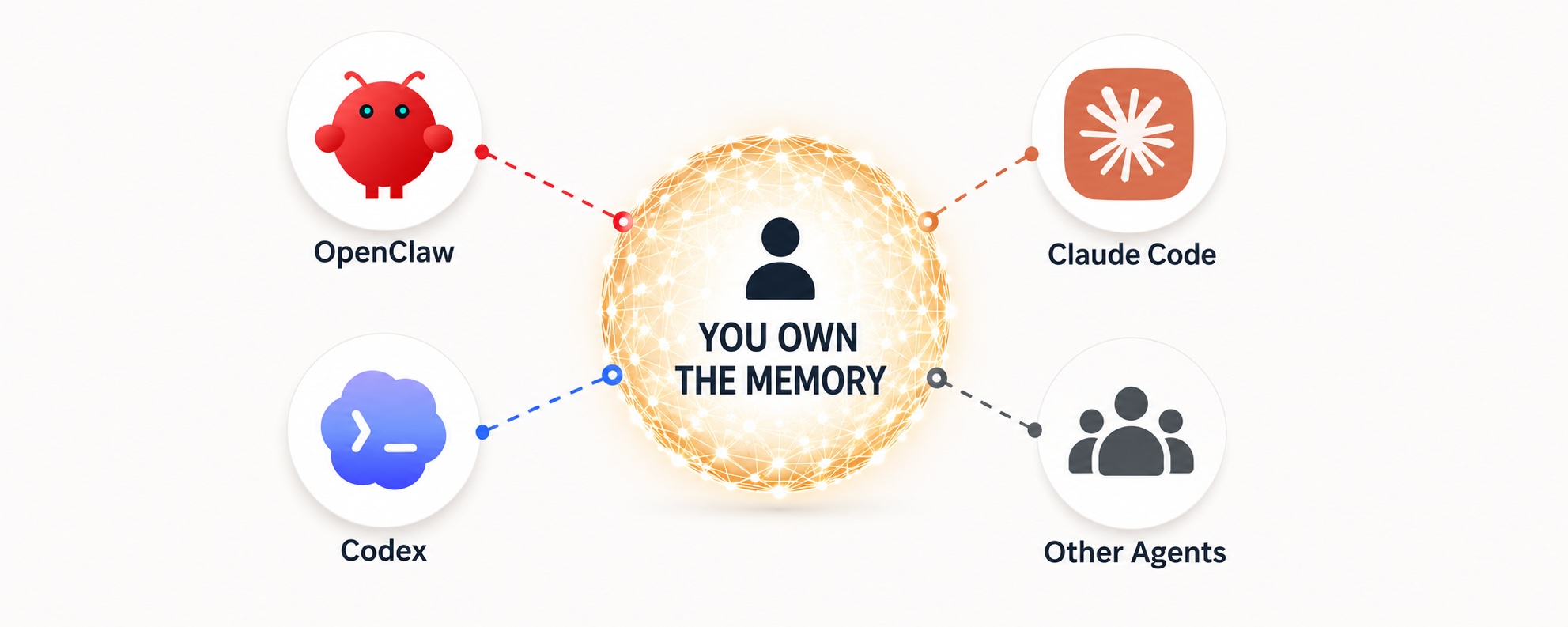
In multi-agent systems today, knowledge still lives in individual β€œskulls”. Each agent operates with its own isolated context window and memory, even when tools or repositories are shared. This creates fragmented islands of intelligence instead of true collective capability.

The repo is not enough. The next critical layer is a persistent, shared memory system β€” a real β€œhive mind” β€” that allows agents to build on each other’s insights in real time, retain long-term context across sessions, and evolve collective intelligence.