The Knowledge LedgerThe Knowledge LedgerFollow on WhatsApp

A curated stream of high-signal insights across Technology, Healthcare, Lifesciences, AI, Oncology, Business, Entrepreneurship, Leadership, Philosophy and beyond.

Thoughtful, cross-disciplinary content designed to expand how you think, not just what you know.

No noise. Only substance.

Filtered by #business-strategyClear filter
Jul 2, 2026·x.com

Intelligence Is Becoming Abundant — What Happens Next?

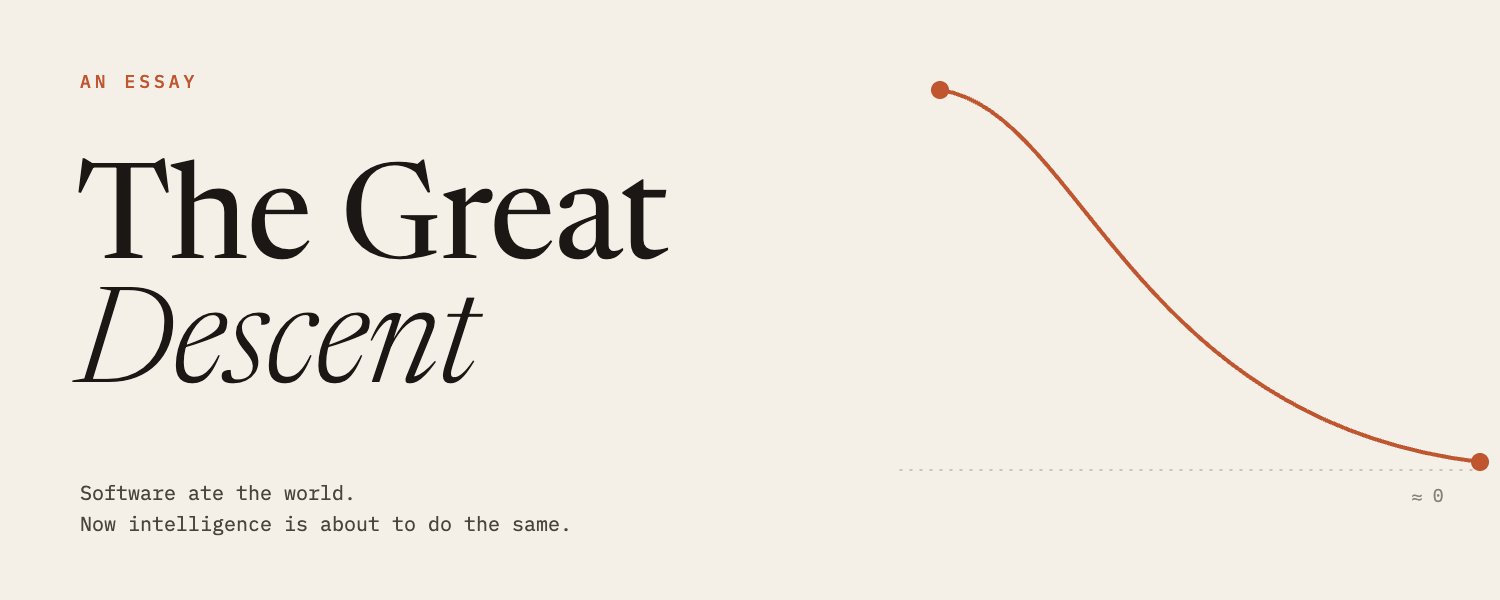
Fifteen years after Marc Andreessen declared that "software is eating the world," we are entering the next phase: intelligence itself is becoming abundant and nearly free.

Just as information became abundant through the internet, expertise and judgment — the scarce resource that was locked inside trained professionals — is now descending the cost curve at extraordinary speed. This descent is happening on two compounding curves at once: cheaper hardware and more efficient models. The result is that high-quality reasoning, once expensive and rationed, is rapidly becoming a commodity.


Jul 1, 2026·x.com

The AI Industry Is Shifting from Intelligence to Intelligence Per Dollar

The dominant conversation in AI still revolves around which company has the smartest frontier model. However, the real economic transition underway is from maximizing raw intelligence to maximizing intelligence per dollar.

Enterprises are rapidly discovering that most workloads do not require the most expensive frontier models. As inference costs continue collapsing at an extraordinary rate, organizations are shifting from asking "Does AI work?" to "Does it work economically at scale?" This change favors cheaper, "good enough" models (including open-weight ones) for the vast majority of tasks, while reserving frontier intelligence only for high-value problems where additional capability creates outsized returns.

Jun 10, 2026·substack.com

The Untrainable

In the current AI landscape, many builders and investors feel despair because frontier models seem poised to absorb almost everything. But according to Sarah Guo, this view misses a critical category: untrainable work.

Measurable, public, and legible tasks (coding benchmarks, generic customer support scripts, standardized processes) are being commoditized rapidly from both below (open models) and above (labs folding scaffolding into weights). What remains valuable and defensible is work that is private, context-rich, high-stakes, and dependent on trust, permissions, accountability, and deep integration with proprietary systems.

May 28, 2026·x.com

Yellow Brick Road vs The Rest of Oz

The labs are aggressively pursuing the obvious horizontal layer of agentic AI — general code generation, writing, image creation, and simple tool-calling agents. This is the well-trodden Yellow Brick Road, where raw model capability dominates and labs hold decisive advantages in scale, distribution, and architecture.

The real moats and durable value creation lie in The Rest of Oz: complex, vertical, multi-step workflows involving messy real-world data, legacy systems, regulatory constraints, multi-player coordination, and industry-specific tribal knowledge. These require deep scaffolding, data flywheels, governance, and deterministic outcomes that horizontal models cannot easily replicate.

May 28, 2026·bigthink.com

Kyosei: Helping Your Rivals Makes You Harder to Beat

True long-term competitive advantage often comes not from crushing competitors, but from helping them thrive.

The Japanese philosophy of kyōsei (co-prosperity / living together for the common good) reframes competition as part of a larger ecosystem. When rivals strengthen each other, the entire system becomes more resilient, innovative, and durable. Japan’s thousands of century-old companies (shinise) and examples like the cooperative rebuilding of Kinosaki after an earthquake or Canon’s strategic partnerships demonstrate that mutual prosperity creates greater longevity than zero-sum dominance.

May 24, 2026·x.com

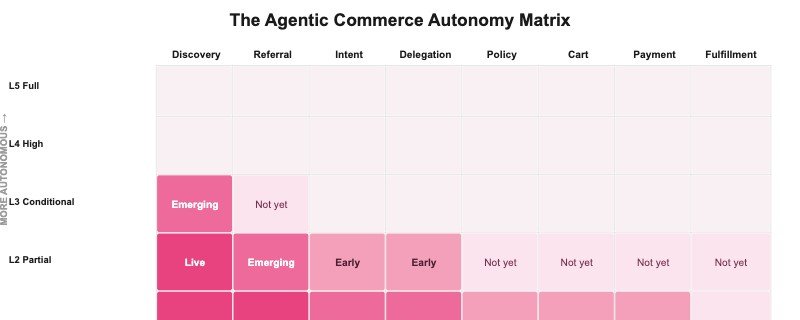
Agentic Commerce Is Far More Than Payments

The entire e-commerce journey is being rebuilt for autonomous agents.

Traditional stages — discovery, referral, cart, authorization, and fulfillment — are now joined by two new critical steps: Intent and Delegation. Protocols such as UCP, AP2, and TAP are making commerce fully machine-readable, enabling agents to compare SKUs, carry signed intent, negotiate policies, and handle post-purchase flows without constant human intervention.

May 20, 2026·x.com

UCP and ONDC: Language vs Highway in Agentic Commerce

Google's Universal Commerce Protocol (UCP) and India's ONDC are not rivals. They operate on entirely different layers of the commerce stack and together create a powerful symbiotic system for the agentic era.

UCP functions as the universal language — standardizing how any AI agent discovers inventory, negotiates, and handles post-purchase. ONDC functions as the sovereign open highway — built on Beckn protocol and India Stack.