The Knowledge LedgerThe Knowledge LedgerFollow on WhatsApp

A curated stream of high-signal insights across Technology, Healthcare, Lifesciences, AI, Oncology, Business, Entrepreneurship, Leadership, Philosophy and beyond.

Thoughtful, cross-disciplinary content designed to expand how you think, not just what you know.

No noise. Only substance.

Filtered by #systems-thinkingClear filter
Jul 10, 2026Β·gilharilabs.com

What If Evaluations Had Three Dimensions?

Most evaluations today reduce complex outcomes to a single scalar score or leaderboard number. This compression makes it impossible to distinguish between a genuine, reliable improvement and a fragile result that looks good only on the measured metric.

Nagaraju Gangaraju proposes shifting from one-dimensional scalars to a three-dimensional evaluation space called Vec3(T, R, V), where:


Jun 29, 2026Β·aeon.co

Poverty Is Manufactured, Not Inevitable

Poverty is often treated as a natural condition or a personal failing. In reality, it is largely a product of systemic exclusion, uncertainty, and structures that create vulnerability.

Anirudh Krishna and Dirk Philipsen argue that poverty is not simply the absence of money. It is a web of deprivations β€” lack of security, opportunity, agency, and dignity β€” shaped by policies, institutions, and historical processes of dispossession. Common myths (that poverty has always existed, that it's mainly about cash, or that it's self-inflicted) obscure its structural roots.

Jun 29, 2026Β·cosx.ai

Same Brain, Different Model: Testing LLMs in a Real Agent

Most LLM evaluations rely on generic benchmarks that often fail to predict performance in actual production agent systems. This experiment kept the entire agent infrastructure fixed (tools, prompts, retrieval, retry logic, and orchestration) and swapped only the underlying model across 15 LLMs.

The agent was tasked with turning natural language business questions into validated, executable queries against a large analytics store β€” a realistic, multi-step workflow involving planning, tool use, query generation, self-repair, and output validation.

Jun 26, 2026Β·hbr.org

Great Leaders Question Philosophical Assumptions

Business leaders increasingly face decisions that are not just technical, financial, or operational β€” they are deeply philosophical. Questions about what a company fundamentally is, what counts as valid knowledge or evidence, and what is ethically right are becoming central to strategy and leadership.

Yet most executives have never been trained to surface and examine these hidden assumptions. In a world where old certainties are breaking down, treating decisions as purely practical problems can lead to blind spots, misaligned priorities, and unintended consequences.

Jun 23, 2026Β·knightcolumbia.org

The Cylon Problem: AI, Fakery, and Informational Power

AI is intensifying two interconnected crises in our information ecosystem.

The first is what SalomΓ© Viljoen calls the "Cylon problem" β€” the growing indistinguishability between authentic human content and AI-generated material. This creates widespread epistemic instability: people can no longer reliably tell what is real, leading to generalized suspicion, the dismissal of genuine content as fake, and the proliferation of low-quality "slop." The result is a "zombie internet" where AI-generated content dominates engagement without genuine human connection.

Jun 22, 2026Β·x.com

Experts Don't Think Harder. They See More Patterns.

What separates experts from everyone else isn't superior intelligence or the ability to think more moves ahead. It's pattern recognition.

Research on chess masters shows they don't calculate deeper than amateurs. Instead, they instantly recognize familiar configurations ("chunks") they've seen thousands of times before. A position isn't 32 individual pieces β€” it's a handful of meaningful structures, each triggering associated responses without conscious effort.

Jun 21, 2026Β·x.com

Presentmaxxing: The Practice Hidden in Plain Sight

Formal meditation often fails to deliver lasting change. You sit for twenty minutes, feel relatively calm, then open your eyes and immediately return to the same mental loops.

The real issue isn't the meditation itself β€” it's treating presence as a separate task rather than integrating it into daily life.

Jun 21, 2026Β·x.com

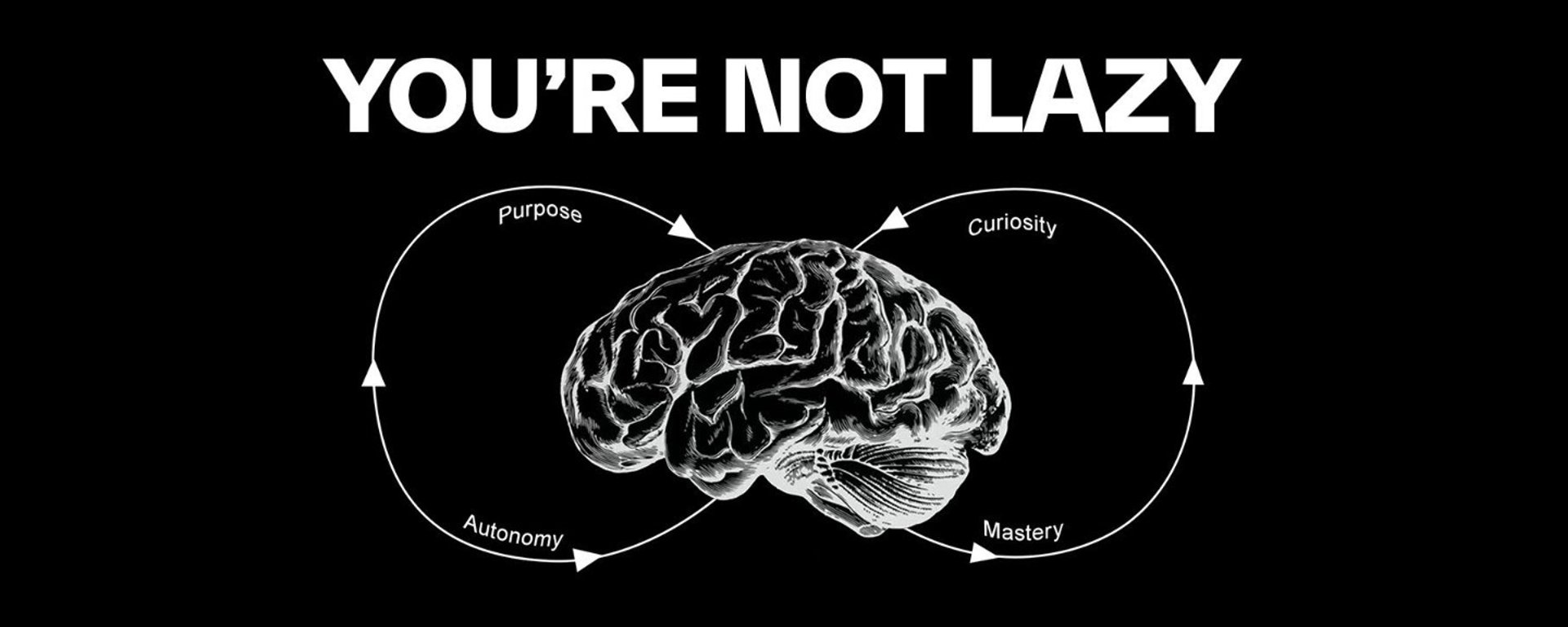
The Motivation That Makes Hard Work Feel Easy

Most people rely on extrinsic motivation β€” money, praise, status, or fear of failure. It works in the short term but fades quickly. The brain gets a dopamine hit from anticipating the reward, not from the reward itself, so the fuel runs out.

Intrinsic motivation is far more powerful. It comes from within and compounds over time. It turns hard work into something the brain actively craves, creating an upward spiral of skill, engagement, and flow state.

Jun 17, 2026Β·medium.com

Problem-Forming Beats Problem-Solving

Most education and training focuses on solving well-defined puzzles with clear information and single correct answers. But the real world rarely presents problems this way.

The best problem solvers don’t just solve given problems β€” they excel at forming the right problems in the first place. This requires deep domain immersion, observing anomalies, talking to people on the ground, and building prototypes to discover what actually matters.