The Knowledge LedgerThe Knowledge LedgerFollow on WhatsApp

A curated stream of high-signal insights across Technology, Healthcare, Lifesciences, AI, Oncology, Business, Entrepreneurship, Leadership, Philosophy and beyond.

Thoughtful, cross-disciplinary content designed to expand how you think, not just what you know.

No noise. Only substance.

Filtered by #optimizationClear filter
Sep 14, 2026Β·x.com

Intelligence Has a Speed Limit

Recursive self-improvement is usually told as a spell: the model tweaks itself, gets smarter, tweaks itself again. Control theory treats that as a feedback loop with a maximum safe speed, set by how fast you can generate trustworthy evidence that a change was actually an improvement.

A loop stays stable when the product of its gains stays below one. Gain here is how large a modification the system makes per unit of evidence. The entire appeal of self-improvement is high gain. Adaptive control already learned the hard version of this: proofs assumed a plant, a mild violation of the assumptions sent the system haywire. Unstable adaptive systems often do not blow up immediately. They burst: run beautifully, then fail without warning.

Sep 12, 2026Β·x.com

Growth Is a Search Problem

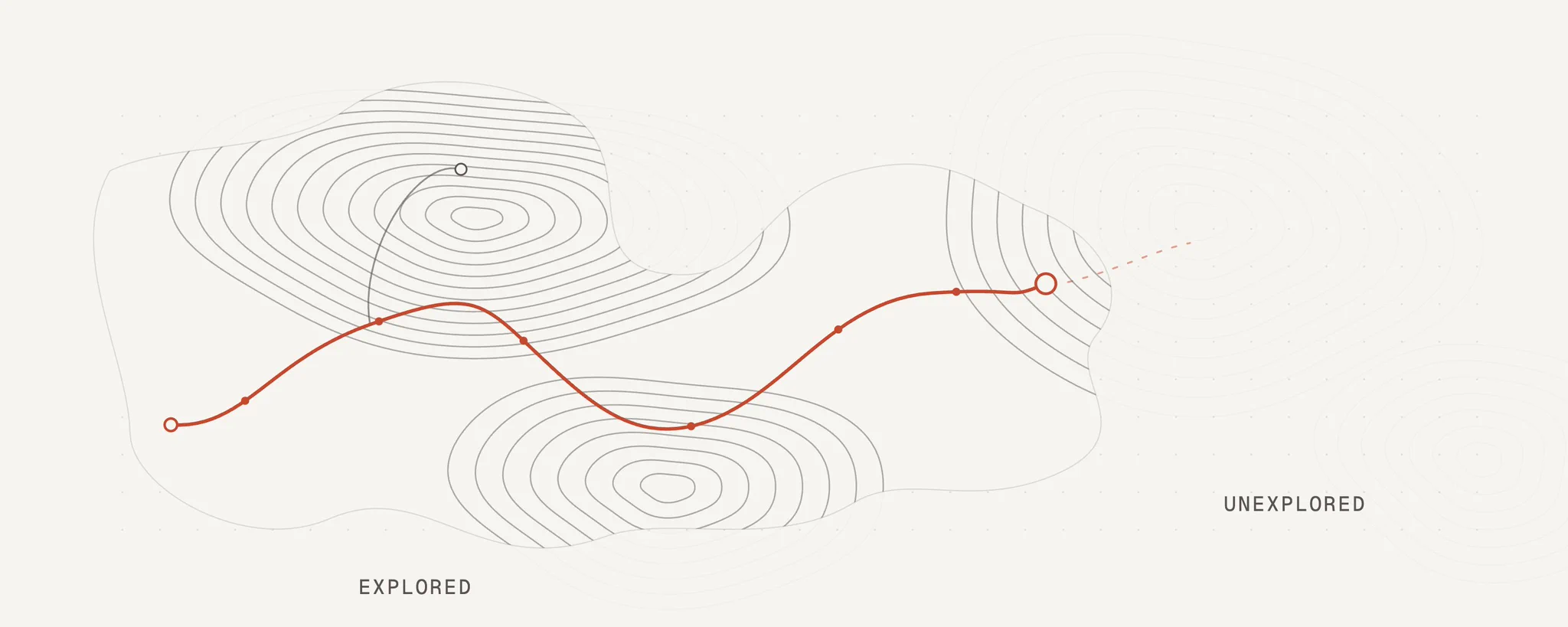
You start in fog, on a dark map, with an objective and no knowledge of which direction is uphill. The craft has always been a loop: hypothesize, move, observe, update. Hill climbing is one part of that loop. It can take you to a local peak, or up the wrong mountain if the proxy is wrong. One company optimized registered users. Another optimized people who actually came back.

AI changes the economics of the loop, not the geometry of the terrain. Agents can analyze, propose, ship, and interpret. You can now climb the wrong hill much faster. A rigid roadmap assumes the order of tests matches the size of the opportunities. Bandits waste less traffic on losers. A better strategy spends a small slice of budget mapping lever sensitivity first: poke the map, then climb where it makes a difference.

Aug 24, 2026Β·arxiv.org

FreeToken: Making the Local Machine an Elastic Inference Platform

Most local serving systems treat a personal computer as a small GPU that must fit the model. FreeToken starts from a different premise. The machine is a unified, elastic inference platform whose CPU, GPU, and interconnect can be orchestrated continuously as workloads and available resources change.

The system is designed for Mixture-of-Experts models and for agentic workloads that repeatedly edit context and call tools. Its core techniques include bandwidth-adaptive execution (deciding in real time whether missing experts should be moved to the GPU or run on the CPU), semantic-aware state caching at natural boundaries, full-layer double buffering during prefill, and elastic reallocation of GPU memory between KV cache and experts.

Jul 24, 2026Β·x.com

The Minimum Viable Baseline for Local LLMs

Running large language models locally requires compression. The practical question is how far you can go before quality becomes unusable.

Across benchmarks and deployment experience, a clear baseline has emerged: 4-bit weight quantization combined with 8-bit KV cache. This combination preserves roughly 92–99% of full-precision (BF16) quality and is the current minimum viable floor for most practical applications.

Jul 10, 2026Β·gilharilabs.com

What If Evaluations Had Three Dimensions?

Most evaluations today reduce complex outcomes to a single scalar score or leaderboard number. This compression makes it impossible to distinguish between a genuine, reliable improvement and a fragile result that looks good only on the measured metric.

Nagaraju Gangaraju proposes shifting from one-dimensional scalars to a three-dimensional evaluation space called Vec3(T, R, V), where:

Jun 6, 2026Β·substack.com

The Optimization Trap

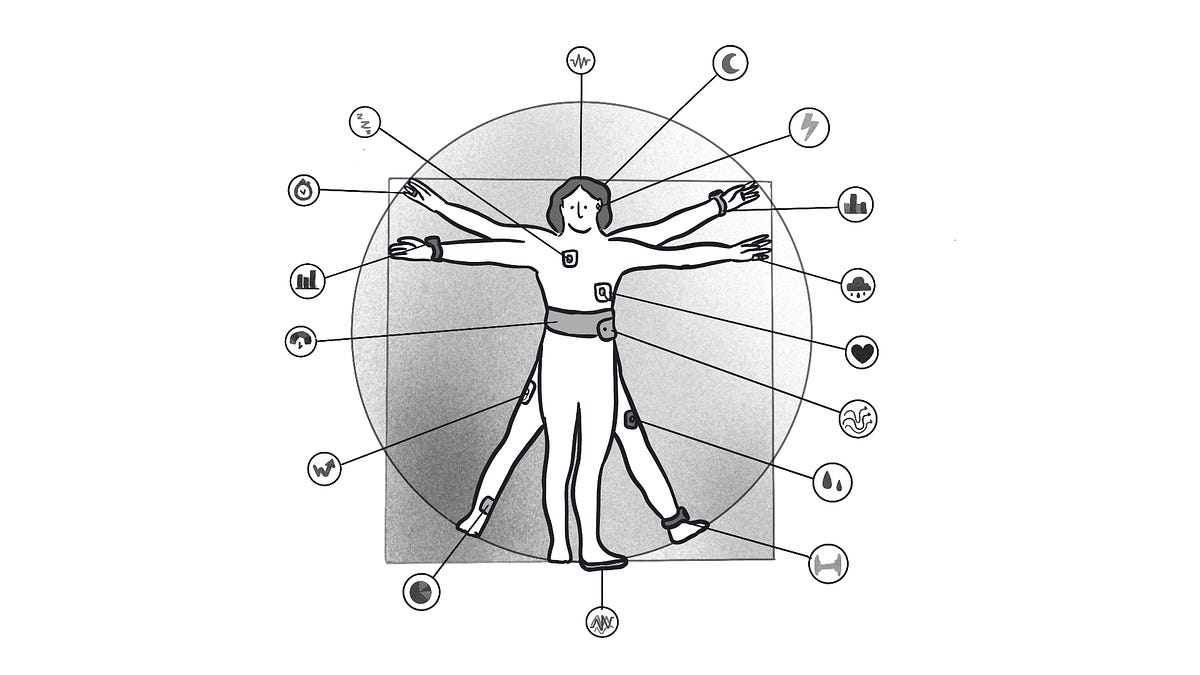
We are living in the golden age of self-optimization. Track your sleep, hit your macros, maximize your VOβ‚‚ max, read 50 books a year, cold plunge, red-light therapy, 5 a.m. wake-ups β€” the list is endless.

But according to Scott Galloway, this obsession with measurement and β€œmaxxing” is not making us better. It’s making us more anxious, more perfectionistic, and less alive.