
The Knowledge LedgerThe Knowledge LedgerFollow on WhatsApp

A curated stream of high-signal insights across Technology, Healthcare, Lifesciences, AI, Oncology, Business, Entrepreneurship, Leadership, Philosophy and beyond.

Thoughtful, cross-disciplinary content designed to expand how you think, not just what you know.

No noise. Only substance.

Filtered by #llm-architectureClear filter
Sep 16, 2026Β·x.com

Memory Is a View. History Is the Source.

Most memory systems decide on the write path. An event happens, a model extracts what seems important, and the rest is discarded. That keeps the store clean. It also asks the write path to know, at ingest, what will matter in three months. A detail that looks irrelevant in a support chat may explain an escalation later. Once the raw event is gone, better retrieval cannot recover it.

The better pattern is the old data-lakehouse move: preserve what happened, then build the useful representations later. Summaries, embeddings, graphs, and memories become replaceable views over an immutable history. The same conversation can yield one set of facts today and another next year. Better models can re-index old history. New agents can use it in ways nobody planned at capture time.

Aug 13, 2026Β·silentroom.media

What a Token Actually Costs

A token is not a fixed unit of text. It is the output of a tokenizer. The same content can produce meaningfully different token counts depending on language, model version, and even quiet tokenizer updates. Non-English text routinely consumes more tokens. Output tokens are priced much higher than input tokens. Reasoning or β€œthinking” tokens are usually billed as output as well.

These mechanics create systematic opacity. Listed per-million-token prices are unreliable proxies for real cost. Cheaper models can end up more expensive overall because they consume more tokens to reach the same result. Subscription plans hide limits through silent model downgrades and non-comparable quotas. The practical consequence is that teams cannot budget accurately from published rate cards alone.

Jul 29, 2026Β·openreview.net

LLMs Can't Jump

Scientific invention requires more than pattern recognition or formal proof. Following Einstein’s own account of discovery, it depends on an intuitive jump from experience to new axioms. Only after that jump does deduction and verification become possible.

Large language models have become strong at induction (extracting patterns from data) and are rapidly improving at deduction (reasoning from given premises). What they still lack is the capacity for the abductive jump itself: the generation of novel explanatory principles when existing ones are insufficient.

Jul 24, 2026Β·x.com

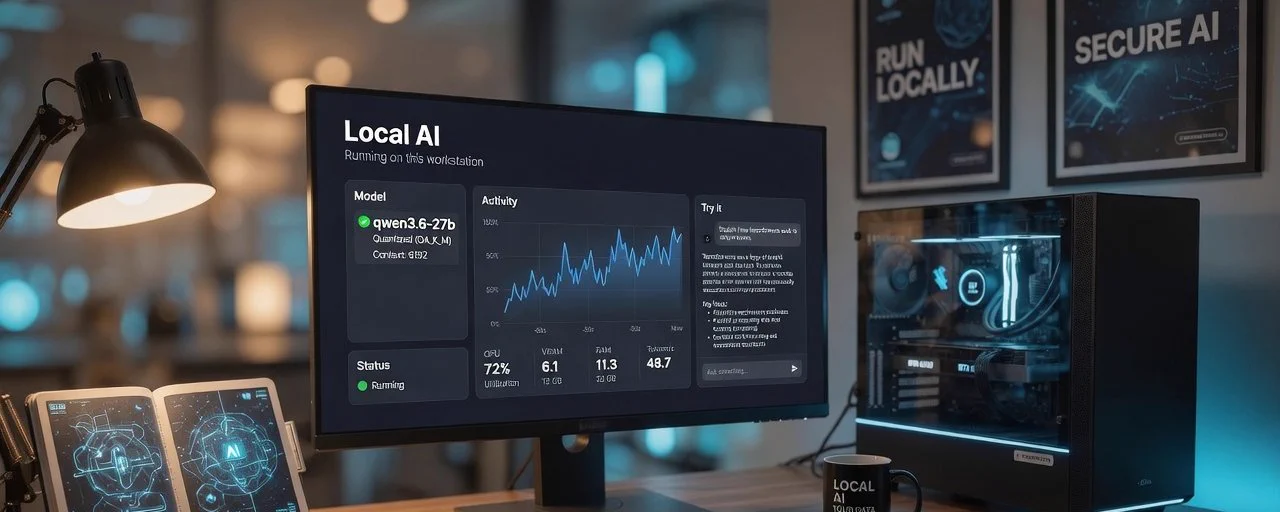
The Minimum Viable Baseline for Local LLMs

Running large language models locally requires compression. The practical question is how far you can go before quality becomes unusable.

Across benchmarks and deployment experience, a clear baseline has emerged: 4-bit weight quantization combined with 8-bit KV cache. This combination preserves roughly 92–99% of full-precision (BF16) quality and is the current minimum viable floor for most practical applications.

May 21, 2026Β·arxiv.org

MeMo: Memory as a Model

A new paradigm treats memory not as passive retrieval or LLM fine-tuning, but as a separate, fully trainable model that can be plugged into any existing large language model.

MeMo introduces a modular framework with a novel data synthesis pipeline, model merging for continual learning, and a black-box inference protocol. It delivers strong performance on complex benchmarks like BrowseComp-Plus, NarrativeQA, and MuSiQue while keeping inference costs constant and remaining robust to noisy data.