The Knowledge LedgerThe Knowledge LedgerFollow on WhatsApp

A curated stream of high-signal insights across Technology, Healthcare, Lifesciences, AI, Oncology, Business, Entrepreneurship, Leadership, Philosophy and beyond.

Thoughtful, cross-disciplinary content designed to expand how you think, not just what you know.

No noise. Only substance.

Filtered by #leadershipClear filter
Jun 26, 2026Β·hbr.org

Great Leaders Question Philosophical Assumptions

Business leaders increasingly face decisions that are not just technical, financial, or operational β€” they are deeply philosophical. Questions about what a company fundamentally is, what counts as valid knowledge or evidence, and what is ethically right are becoming central to strategy and leadership.

Yet most executives have never been trained to surface and examine these hidden assumptions. In a world where old certainties are breaking down, treating decisions as purely practical problems can lead to blind spots, misaligned priorities, and unintended consequences.

Jun 22, 2026Β·x.com

Experts Don't Think Harder. They See More Patterns.

What separates experts from everyone else isn't superior intelligence or the ability to think more moves ahead. It's pattern recognition.

Research on chess masters shows they don't calculate deeper than amateurs. Instead, they instantly recognize familiar configurations ("chunks") they've seen thousands of times before. A position isn't 32 individual pieces β€” it's a handful of meaningful structures, each triggering associated responses without conscious effort.

Jun 21, 2026Β·x.com

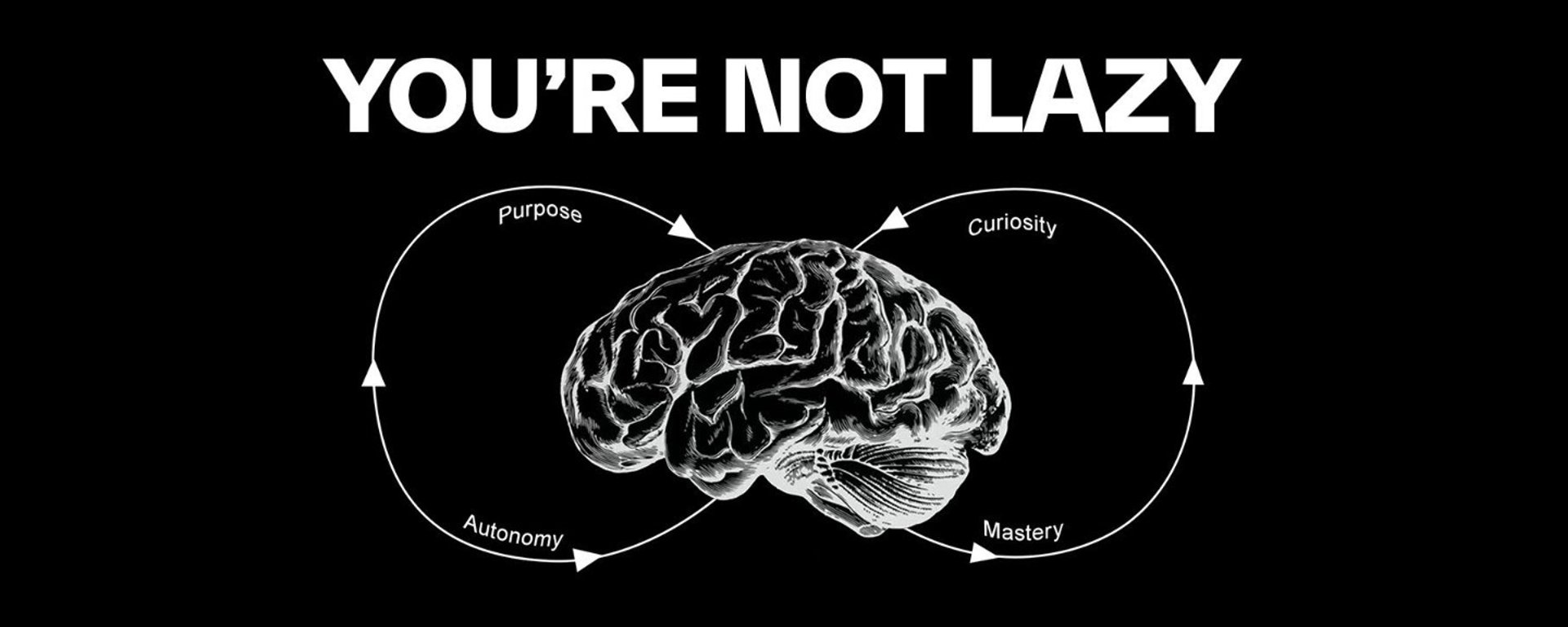
The Motivation That Makes Hard Work Feel Easy

Most people rely on extrinsic motivation β€” money, praise, status, or fear of failure. It works in the short term but fades quickly. The brain gets a dopamine hit from anticipating the reward, not from the reward itself, so the fuel runs out.

Intrinsic motivation is far more powerful. It comes from within and compounds over time. It turns hard work into something the brain actively craves, creating an upward spiral of skill, engagement, and flow state.

Jun 17, 2026Β·medium.com

Problem-Forming Beats Problem-Solving

Most education and training focuses on solving well-defined puzzles with clear information and single correct answers. But the real world rarely presents problems this way.

The best problem solvers don’t just solve given problems β€” they excel at forming the right problems in the first place. This requires deep domain immersion, observing anomalies, talking to people on the ground, and building prototypes to discover what actually matters.

Jun 10, 2026Β·substack.com

Discipline Enables Spontaneity

Most people treat discipline and spontaneity as opposites. Discipline feels like rigid structure and control. Spontaneity feels like freedom and flow. But the highest form of living requires both.

Discipline is what makes real spontaneity possible. Without it, spontaneity collapses into chaos and distraction. A jazz musician can improvise beautifully only because of thousands of hours spent mastering scales and rhythms. The same principle applies to creators, athletes, leaders, and entrepreneurs: apparent freedom is almost always built on a foundation of invisible structure.

Jun 6, 2026Β·substack.com

The Optimization Trap

We are living in the golden age of self-optimization. Track your sleep, hit your macros, maximize your VOβ‚‚ max, read 50 books a year, cold plunge, red-light therapy, 5 a.m. wake-ups β€” the list is endless.

But according to Scott Galloway, this obsession with measurement and β€œmaxxing” is not making us better. It’s making us more anxious, more perfectionistic, and less alive.

May 6, 2026Β·x.com

True Redesign Is What Separates AI Winners From Everyone Else

Most companies are treating AI as an add-on. They bolt assistants onto existing workflows and wonder why nothing fundamentally changes.

AI-native companies do something much harder. They ask the first-principles question: if we were starting from scratch today, how would we rebuild every product, process, workflow and even the organization itself? In many ways its flying a plane while building it.

Apr 27, 2026Β·x.com

Experience Is Now a Tax

Senior leaders who rarely use AI tools are still making the major calls on AI strategy. Meanwhile 22 year olds are shipping production code and prototypes in hours using fluency their bosses took decades to build.

AI dramatically lowers the cost of experimentation, knowledge retrieval, and reversal. What once required years of priors can now be tested and refined rapidly.