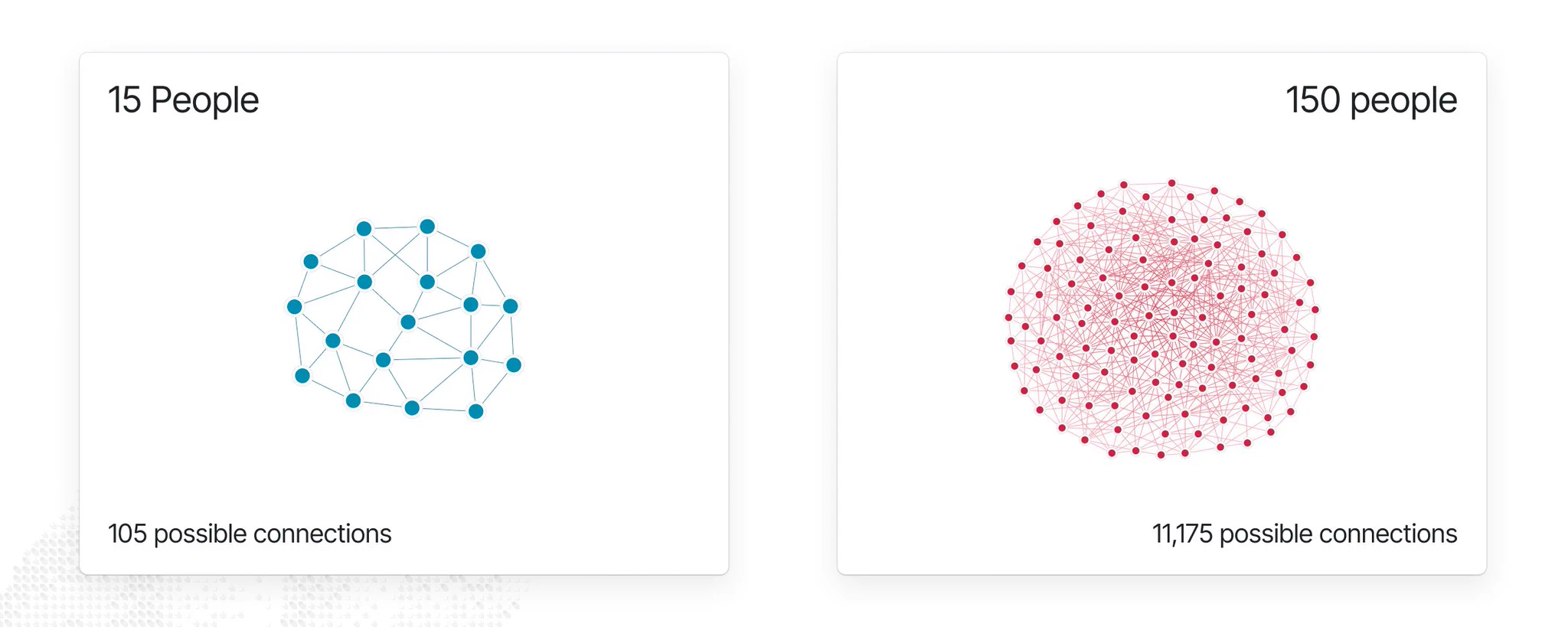
Why everything breaks at 150 people
Internal knowledge bases hold a company’s IP, tribal knowledge, and operating DNA. Most of them still fail.
The core problems are simple and persistent. There is usually no real ownership, so information decays. Knowledge is scattered, outdated, or conflicting. Agents receive poor context. People keep asking teammates the same questions.
A better system starts with hierarchy, not volume. The most reliable source is the codebase: structured, versioned, and tested. Documentation should be treated as an authoritative layer, not a landfill. Slack and other noisy sources should feed into maintained documents rather than serve as primary truth. Connecting every possible source into a generic “company brain” usually lowers quality by introducing contradiction.
Great knowledge systems also require ongoing maintenance. When code changes, related documents should update. Search should be improved by curating the underlying material, not just by adding retrieval tricks. Ownership must be explicit: a DRI for the overall system and clear document owners for individual sections.
The practical way to start is small. Overhaul one mission-critical team’s knowledge in a short sprint. Create a clear example of what good looks like. Then expand.
This Ledger Entry expands how the reader thinks by shifting the focus from “more sources and better search” to ownership, source quality hierarchy, and treating knowledge as a living system that needs the same discipline as a codebase.