
The Knowledge LedgerThe Knowledge LedgerFollow on WhatsApp

A curated stream of high-signal insights across Technology, Healthcare, Lifesciences, AI, Oncology, Business, Entrepreneurship, Leadership, Philosophy and beyond.

Thoughtful, cross-disciplinary content designed to expand how you think, not just what you know.

No noise. Only substance.

Filtered by #ai-in-medicineClear filter
Jul 7, 2026ยทarxiv.org

ATHENA-R1: An AI Agent That Reasons Over Biomedical Tools

Treatment reasoning in medicine is inherently iterative: it requires identifying missing information, gathering evidence from multiple sources, evaluating contraindications and comorbidities, and revising conclusions as new data emerges. Most current AI systems struggle with this because they lack a structured way to seek and integrate evidence before forming a recommendation.

Researchers introduce ATHENA-R1, an AI agent trained to perform treatment reasoning across all FDA-approved drugs since 1939 by interacting with a universe of 212 real biomedical tools (covering indications, interactions, adverse events, disease phenotypes, and more). The agent learns to identify knowledge gaps, call the appropriate tools, incorporate retrieved evidence, and iterate until it reaches a grounded decision.
Jul 3, 2026ยทnature.com

COMPASS: A Generalizable AI Model for Immunotherapy Response

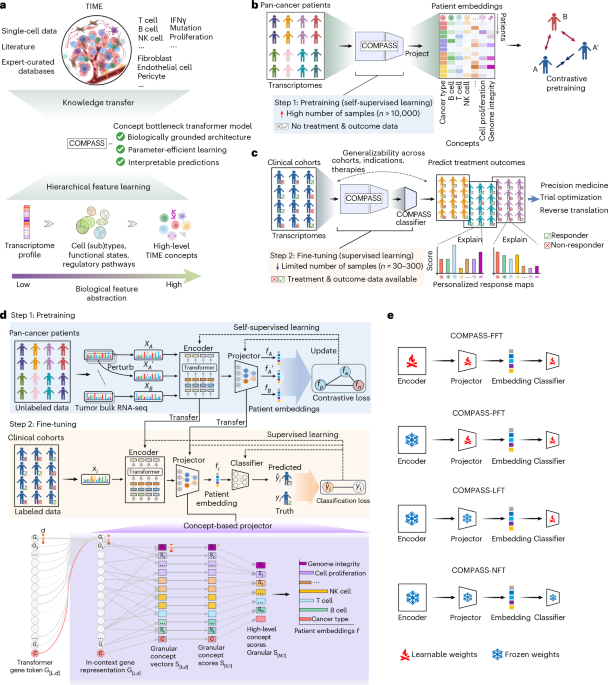
Most patients do not respond to immune checkpoint inhibitors (ICIs), and existing biomarkers often fail to generalize across cancer types and treatments. Researchers developed COMPASS, a pan-cancer foundation model that predicts ICI response directly from bulk tumor transcriptomes using a concept bottleneck transformer.

COMPASS encodes gene expression through 44 biologically grounded immune concepts (cell states, tumor-microenvironment interactions, and signaling pathways). Trained on over 10,000 tumors, it significantly outperforms 22 existing methods across 16 external clinical cohorts spanning multiple cancers and different ICIs. It also generalizes well to previously unseen cancer types and therapies.

Jun 24, 2026ยทnature.com

AI Discovers a New Biomarker for Sudden Cardiac Death

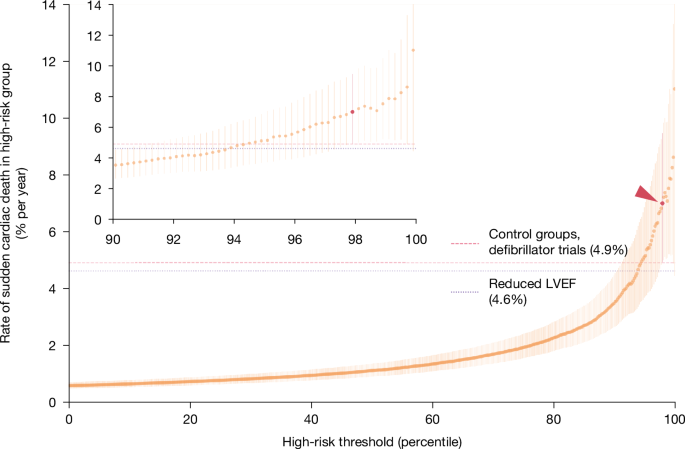
Sudden cardiac death remains difficult to predict. The current clinical standard โ€” reduced left ventricular ejection fraction (LVEF) โ€” misses most at-risk patients and leads to many unnecessary defibrillator implants.

Researchers used deep learning on a large Swedish dataset of routine ECGs linked to death records and discovered a previously unknown ECG biomarker: a subtle slurred terminal R wave in lead aVL. This pattern is associated with higher risk of sudden cardiac death, likely linked to myocardial fibrosis.