The Knowledge LedgerThe Knowledge LedgerFollow on WhatsApp

A curated stream of high-signal insights across Technology, Healthcare, Lifesciences, AI, Oncology, Business, Entrepreneurship, Leadership, Philosophy and beyond.

Thoughtful, cross-disciplinary content designed to expand how you think, not just what you know.

No noise. Only substance.

Filtered by #ai-agentsClear filter
Sep 13, 2026ยทx.com

More Agents Inside, Fewer Agents on the Network

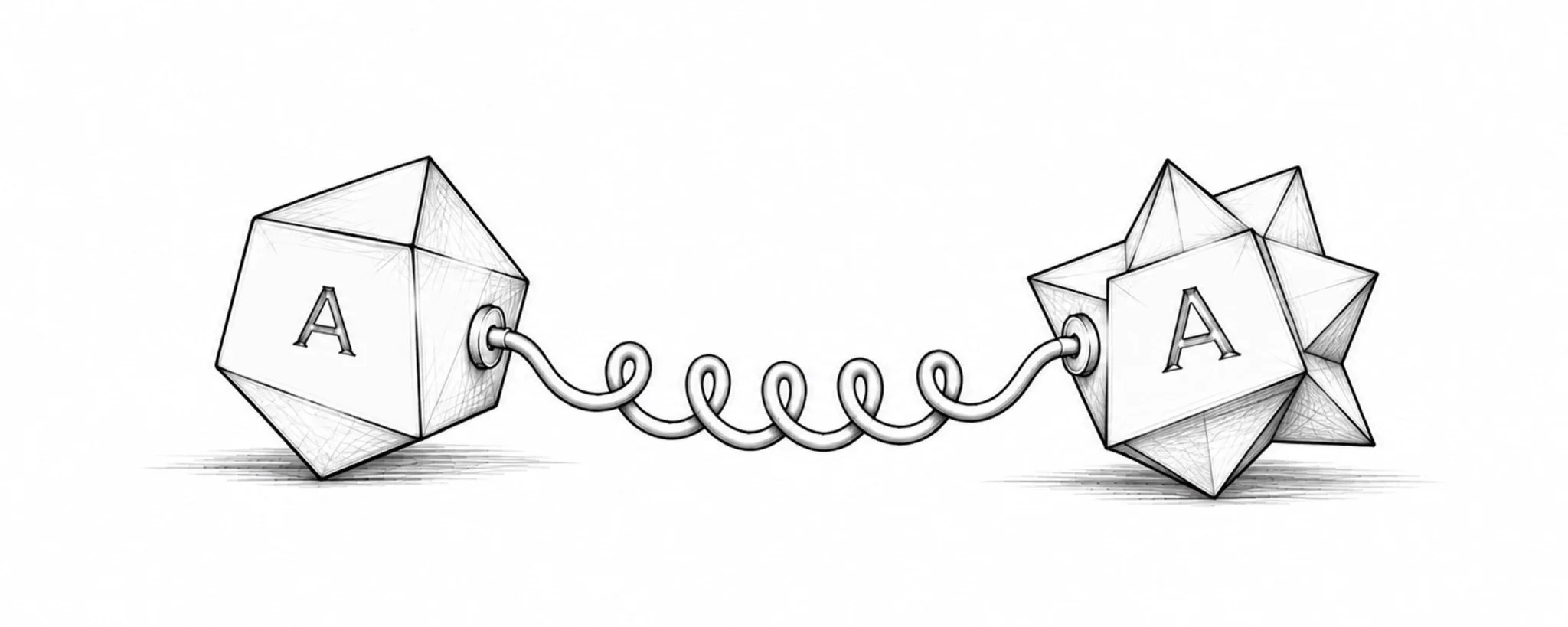
If agents work with other agents, they need a standard way to talk. That was the case for an explicit agent-to-agent protocol. Adoption is real. Meanwhile the rest of the stack has reduced how often agents need to appear to one another as independently addressable peers.

A remote agent can look like a capability. Inference stays behind the interface. Subagents live inside one runtime and die with the task. A supervisor presents one identity while specialists stay internal. Software factories coordinate the work, not a mesh of persistent agent relationships. Workflow engines treat agents as steps in a graph they already own. Handoffs can be artifacts in durable state rather than messages. Queues and event buses already do this at scale.
Sep 4, 2026ยทarxiv.org

Language Models Can Control Thier Own Attention

Language models spend most of their attention on a small fraction of context, yet they still read the entire KV cache to find it. Ask about a detail in a long conversation and every token of the reply may require a full scan. Most sparse methods still pay an O(N) tax just to decide what matters.

Declarative Attention takes the opposite bet. The model already knows which parts are relevant. It declares the scope inside its chain of thought, in three modes. Global: look at everything to navigate. Focus: attend to a specific region. Local: use only recent output to synthesize. The inference engine parses those declarations like tool calls and skips most of the cache read.

Aug 2, 2026ยทarxiv.org

RadHarmony: Making Radiological Data Work for Agentic AI

Training models on radiological images is still slowed by a basic infrastructure problem. Public datasets differ in file formats, directory structures, label schemas, and annotation types. Integrating them into a single training pipeline usually requires custom, one-off engineering for each source.

RadHarmony is an open-source library designed to remove that friction. It standardizes metadata from 24 public datasets into a unified format and delivers samples through a single interface that supports classification labels, segmentation masks, bounding boxes, and radiology reports. The system is built to work with chest radiographs first, with early support for CT and MRI.

May 25, 2026ยทevery.to

The Automation Paradox

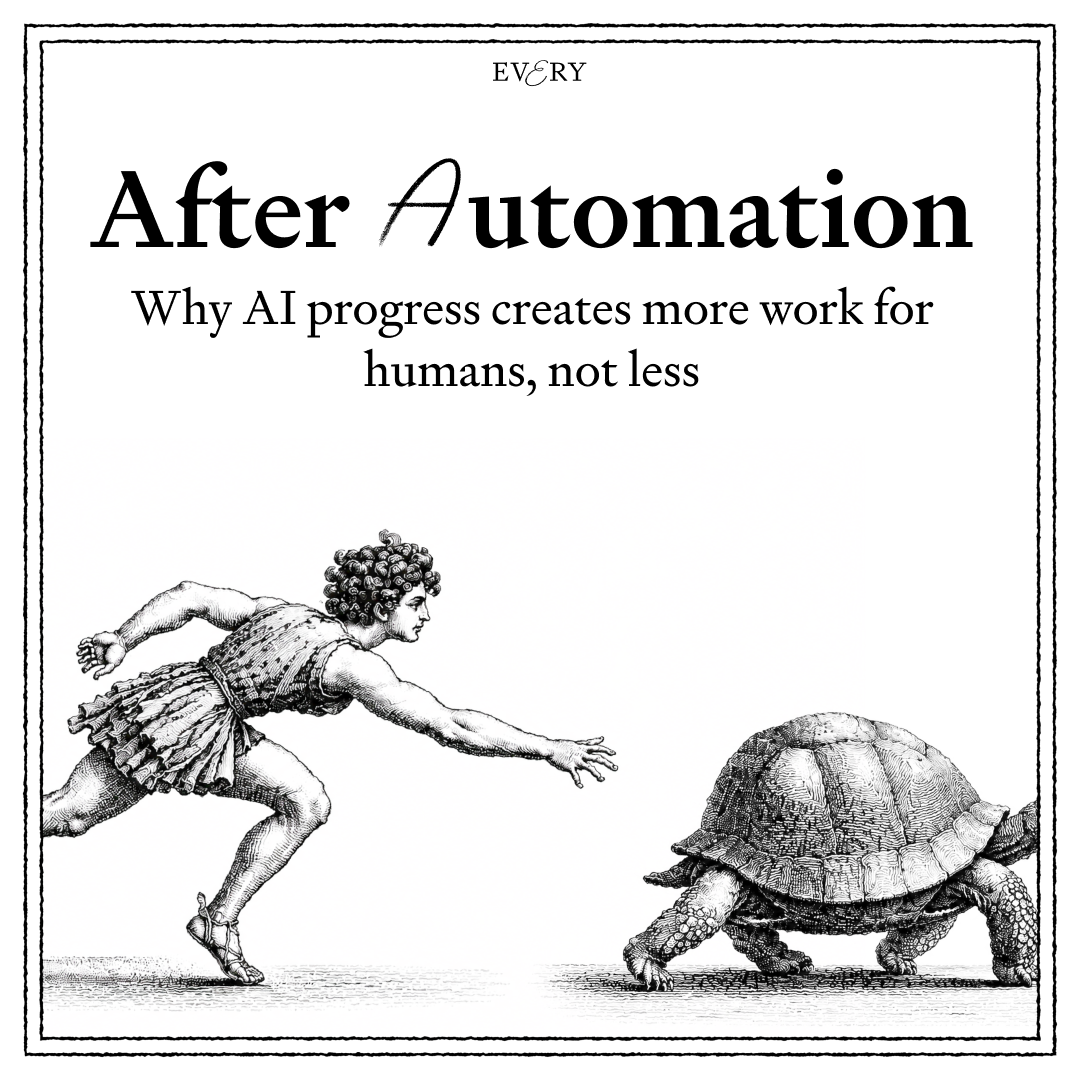
Automation does not eliminate work. It reshapes and multiplies it.

The recurring pattern is the *Human Sandwich*: humans remain essential at the top (setting the frame, defining strategy and intent) and at the bottom (handling edge cases, exceptions, and final accountability), while AI takes over the repetitive middle layers. As AI capability advances, the middle layer expands and the sandwich gets thinner โ€” but the human layers never disappear.